Saturday, April 11, 2015

C4T #3 Jabiz Raisdana

http://www.jabizraisdana.com/blog/leave-with-a-suggestion/#comment-47323

Jabiz Raisdana spoke about how students should need to comprehend in reading doing it everyday with the book they're interested in. Also with writing, students use their critical thinking skills. Helping them use their thinkings more public. She uses these essentials to help them.

READING
  1. Some Essentials:
    1. Be positive
    2. Build classroom Libraries
    3. Read everyday! Everyone- teachers and kids
    4. Confer with kids as often as possible
    5. Give choice. Choice. Choice.
      1. Don’t hand! Let them grab. Offer them three possibilities and let them choose books.
    6. Set goals.
  2. Build a school culture of reading
  3. Reading is the foundation for any writing program.
  4. Increasing stamina builds engagement (kids inhaling books), building complexity builds confidence= Independence.
  5. We Think in Narratives
  6. Persistence + Self-control + Curiosity+ Conscientiousness + Grit= Self-Confidence
  7. Try 6 word book summaries or Twitter reviews to get to the heart of thinking.
Leslie Evans PERMALINK
March 27, 2015
Hi,
My name is Leslie Evans. I am currently a Elementary Education major at the University of South Alabama. I love your blog post. I agree on students need to comprehend reading by doing it everyday and choosing a book they’re interested in. I also love the whole writing in front of the students and make our thinkings public to them to help them practice more on their writing skills. Also, letting them use critical thinking skills. I found this blog post very interesting and helpful to me since I am pursuing my degree in Elementary Education. Thank you for sharing this post with us!


http://www.jabizraisdana.com/blog/back-from-the-cutting-edge/#comment-48855
Jabiz Raisdana talks about how it felt great to be able to read and write without the use of technology. She's been on the cutting edge and in need of a break. She stated that it felt so long that she's being using social media that it seems like she forgot all about it.

Leslie Evans PERMALINK
April 12, 2015
I love this blog post. I feel the same exact way with technology today. I actually love to read books and try not to look on social media, but it always tempts me every single time. I also agree with Sarah Glenn. Technology shouldn’t rule our lives and we should be able to use it in the classrooms as well to interact with the students.


Sunday, April 5, 2015

Project #14

I did a lesson on Kindergarten math with counting by ones and tens. Also, counting coins for snack time.
http://www.educatorsoutlet.com/index.php?main_page=index&cPath=24_100
Lesson Plan
Worksheet 1
Worksheet 2
Counting Coins Online


Saturday, April 4, 2015

Blog Post #11

After watching Back to the Future, I really enjoyed the information that was given. The hot air balloon project was a great way to approach the students with technology and learning the different areas they've come from. While working on the project, the students wrote a story about when they were a balloon. Technology is an active learning for students. Brian Cosby explained the possibilities which are: Collect, Collaborate, Motivate, Empower, Active, and Include. These possibilities can help their learning change each others lives. My favorite quote he said was, "A focus back on the future or consider other possibilities."

http://www.securedgenetworks.com/strategy-blog/Technology-in-the-Classroom-How-to-Choose-the-BestIn this video, it went into great detail about about the Blended Learning Cycle. It's the power of the question and learning in the classroom. This cycle uses online, mobile, and classroom. There's also the 5 E's in the learning cycle which are: Engage, Expand, Evaluate, Explain, and Explore. Paul Anderson talks about QUIVERS.

Questions (Presented with data and explain it)
Investigation/Inquiry (Timing on projects)
Video (On any content using direct instructions)
Elaboration (A lot of reading and more understanding)
Review (Meeting with the students before moving on to the next part of the project)
Summary Quiz (Quiz on covered material)


In Making Thinking Visible, Ron Ritchhart talks about the importance of thinking. Using creative ways have a great deal with flexibility. He thinks students should have an opportunity to know more about the world's influences and looking from different perspectives. Richard also thinks that its about the culture on how the lesson gets taught to have a good supportive atmosphere.

In Super Digital Citizen, Sam Pane is teaching his 4th grade class on how to be a good digital citizen. The class is evaluating the websites they might be able to use in school. Digital citizens are held responsibly and react safely to things. The class project was to make a digital citizen super hero; this project gives the students more ownership. Sam also discusses about ELA Takeaways.

ELA Takeaways
1. Write narratives to develop imagined experiences or events.
2. Analyze how visual and multimedia elements contributes to text.
3. Ask and answer questions.


This video was about Project Based Learning. In the video, three teachers combine History, English, Information and Processing into PBL. PBL engages learners and have a deeper understanding. The use of technology today has been enhanced to be shared in different ways. Technology is also used as a tool that can come to life.

Roosevelt Elementary's PBL Program shows how they use Project Based Learning in the school. These projects can help students gain more knowledge. It also helps them retain more information that's given than the teacher explaining it to them.

Project Based Learning is...
-In Dept Learning
-Integrated thematic instruction
-Based on a real world problem
-Research-based
-Project & Presentation


Sunday, March 29, 2015

Blog Post #10

What can we learn from Mrs. Cassidy?

http://marrshaleyedm310.blogspot.comMrs. Cassidy is a first grade teacher in Canada. She has been encouraging teachers around the world with her use of 21st century technology. In Little Kids...Big Potential, she shows us the use of technology her students do throughout the school year. The students enjoy learning these things in class. Technology they're using in class are blogs, webpage, wikis, video, Skype, and Nintendo DS.

In the first interview video, Cassidy 13 Part 1, Mrs. Cassidy talks about the five special computers students used. These computers did not have any programs that could be downloaded on to it. She also stated that she teaches her students what's appropriate to click on and what is not appropriate. With blogging, parents are very skeptical about the privacy controls on the schools computers. Parents think that its a good idea to see their child's progress throughout the year. The student's blog is used as a online portfolio. For teachers, she recommends they should make their own Personal Network Learning. Change will happen and technology is here to stay. Which means, they will have to keep up with what's happening in technology today.

In the second interview video, Cassidy 13 Part 2, talks about the use of technology in the classroom. The best way to use technology is something that you're most comfortable with. Mrs. Cassidy does not use any social media in her free time. She mentions about that social media is a great tool to use in the classroom. With social media, the best thing for elementary schools to use is Facebook. Teachers can use this to communicate and post homework assignments to remind their students on what's due.

In the final video, Cassidy 13 Part 3, talks about how fast the class will learn how to use the technology given in the classroom. It depends on the pace of how the class is progressing. She mentions thats blogs are not the problem with cheating, its a good way to collaborate by sharing with one another.

I love how Mrs. Cassidy approaches technology to elementary students. I see she's preparing them for the future ahead of time. By the time I teach, I know my students will have some of the basics of technology down packed. It will be a good way to start them up on technology on a intermediate stage.


Wednesday, March 25, 2015

C4K Summary March

This week I had to comment on Cristal's Blog Post. She is a student in Mrs. Maslowski's class at Joliet West High School in Illinois. This week the class had to write about their experience when they attended Job Shadowing. Job Shadowing is actually similar to Career Day. Cristal describes that she wants to do cosmetology, but it doesn't make as much money as she thought.

http://per4cristal.edublogs.org/2015/03/06/job-shadowing/#comment-4
Leslie Evans on said:


Your comment is awaiting moderation. 

Hi Cristal,
I never heard of Job Shadowing before. I actually wanted to do cosmetology before as well, but going into teaching has defined me. I agree with you that you need a good career that has good pay. Just keep finding something that interests you!

http://per8andrew.edublogs.org/2015/02/08/should-religion-be-forced-by-parents/#comments

This week I had to comment on Andrew's Blog Post. He is a student in Mrs. Maslowski's class at Joliet West High School in Illinois. This week Andrew wrote about should religion be forced or picked by the children today. He thinks that the children should have a right to pick their religion instead of being forced by the parents.


Hi Andrew,
Your point of view on religion is really good. Great way to question about being forced or taught about the religion you’re suppose to grow up in. For resources, do a survey and go around and ask to see other people’s opinion about it.
http://kidblog.org/MrsLsAwesome7thgradeclass2014-2014/45c026bc-6971-49d7-bf5c-18db3f45f60e/book-project-2/#comments

This week I had to comment on Boston's Blog Post. He is a student in Mrs. Lombard's class in Oklahoma. This week Boston talked about a book he read called The Unwanteds. He went into great detail about the book, and recommends us to read it.

Leslie Evans (Guest)
Your comment is awaiting moderation. 
Hi Bosten, 
This book sounds interesting to read. You did a great job describing what the book is about. Keep up the good work!

Sunday, March 22, 2015

Blog Post #9

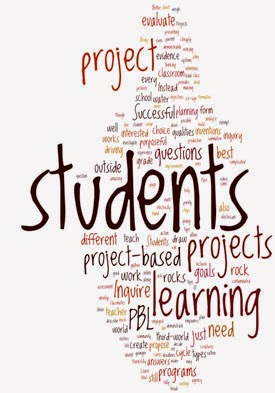
When I first started taking this class, I had no clue what Project Based Learning was. Going through this week's assignment I have a full understanding of how much students learn from using it. What can teachers and students teach us about project based learning? Project Based Learning is a great way to have students interact and gain knowledge throughout their learning process.

http://thoughtfullearning.com/resources/what-are-keys-successful-project-based-programsReading the Seven Essentials for Project Based Learning had a lot of great information I didn't know about PBL. Here are the seven essentials: Need to Know. This is the entry level of any PBL. What information do I actually need before I begin? Driving Question. Its suppose to give the student a sense of purpose and challenge. Student Voice and Choice. Letting students make their project that fits their personality. 21st century skill. Using technology, communicate, and have their own collaboration. Inquiry and Innovation. Using their own questions and using their research that leads to variety of answers. Feedback and Revision. Use rubrics to critique others work. Publicly presented product. The quality of the project that the students worry about and get to present it in front of an audience.

In the video Project Based Learning For Teachers, goes in great detail about about the standards. PBL has students working long extended hours to answer the driven questions that is given. We should think of PBL as Questioning, Investigating, Sharing, and Reflecting. The two main questions are:

-Common Core Standard is What?
-Project Based Learning is How?

In Wing Project: Crafting a Driving Question, teachers are trying to find a good way to do Project Based Learning with the students. They stated that a good driving sets up a question that students will be interested in. Teachers want to see how the project is going to work with the driven question that will need to produce the answers. Crafting the driving question, teachers will have to come up with difficult ideas, see what materials they will need, how it will act putting it together, and to modify it.

In Ten Sites Supporting Digital Classroom Collaboration in Project Based Learning, there are a lot of amazing websites for PBL that can help with classroom collaboration. These sites provided will help student to student, student to teacher, and student to expert from communicating to collaborating with each other. This can help students gain more responsibility using these online tools. I've only used 2 out of 10 websites, which are, Google Docs and Microsoft Live. Using these tools, I find more ways to communicate more with my group and end up learning new things as well.

After watching What motivates students today, I love to see students that are encouraged and influenced by teachers. The way we have to motivate them is to always tell them how well they're doing in class, improve on grades, or to just do well in life. It looks like the students like to be rewarded more on their accomplishments. A good way to reward them is with snacks, brownie points, go outside to play for a little, and have a clip chart of improvements of behavior in the classroom. Those are the only way that we can actually motivate the students and have their undivided attention in the classroom.